
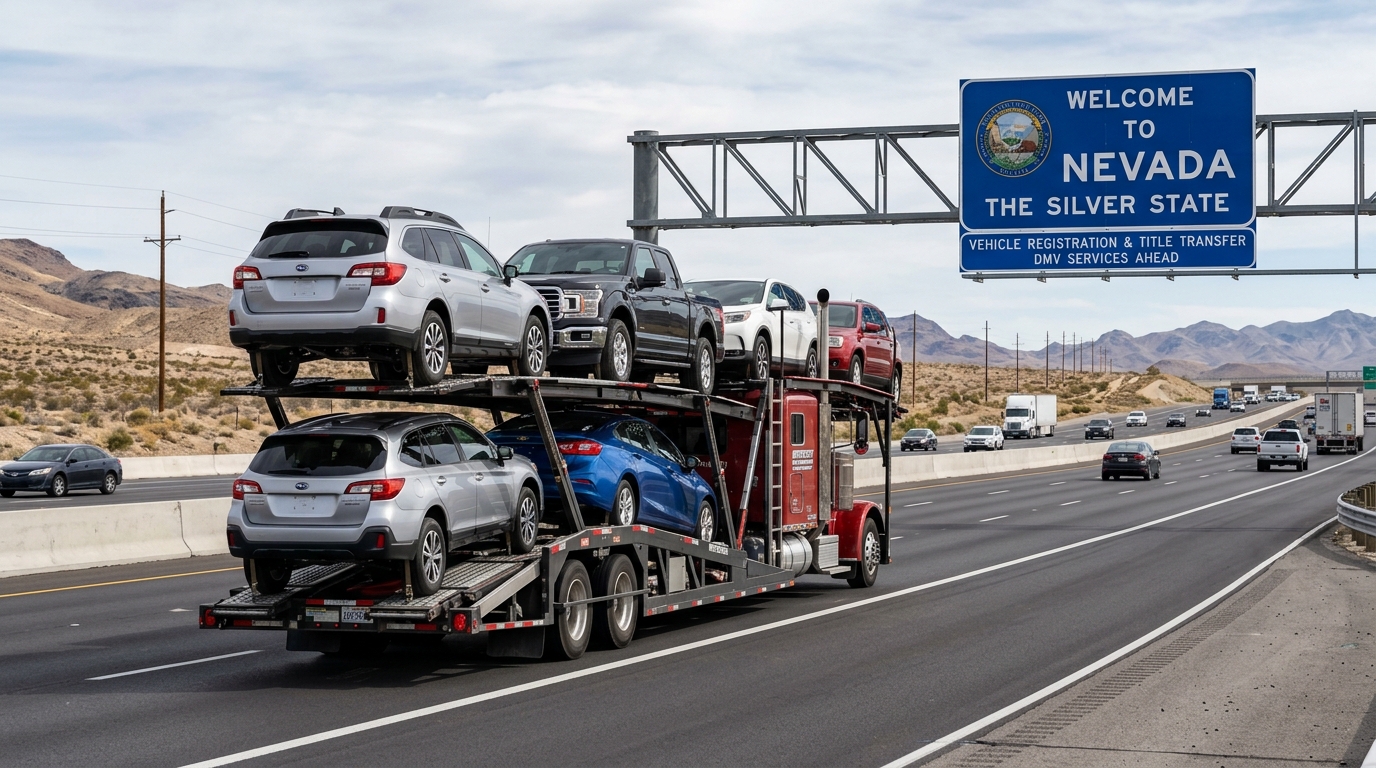
Finding the exact car, trim, and color you want often means looking beyond your home state. Whether you are finding a rust-free coupe in Arizona or saving $3,000 on a truck across state lines, purchasing out of state is easier than ever. But cross-border deals introduce tricky tax rules, temporary driving permits, and mandatory home state DMV inspections.
Quick answer
When you buy a used car out of state, you pay sales tax to the state where you register the car (your home state), not where you bought it. Most states have tax reciprocity agreements, ensuring you never pay full tax twice. To bring it home, obtain an out-of-state In-Transit Permit from the seller's DMV or hire an insured auto transport carrier. Once home, your state DMV will require a physical VIN Verification inspection and safety check before issuing a new title.
How Sales Tax Works Across State Lines
The most common question buyers ask is: "Will I have to pay sales tax in both states?"
In almost every case, the answer is no. Sales tax on motor vehicles is based on where the vehicle is titled and garaged, not where the transaction physically takes place.
| Purchase Channel | Tax Collection Process | What You Pay at Your Home DMV |
|---|---|---|
| Out-of-State Private Seller | No sales tax is collected at the time of sale. | You pay 100% of your home state's use tax rate directly to your local DMV when you title and register the vehicle. |
| Out-of-State Licensed Dealership | The dealer may calculate and collect your home state's tax rate via third-party title services. | If the dealer collected your home state's tax, they remit it directly. If they collected their local rate and reciprocity exists, you pay only the difference if your home rate is higher. |
For example: if you live in Georgia (where the Title Ad Valorem Tax is roughly 6.6%) and buy from a private seller in Florida, Florida collects zero tax. When you bring the title home to Georgia, your local county tag office collects the 6.6% TAVT fee before issuing plates.
Getting the Car Home: Drive vs Ship
You have two primary options for bringing your new vehicle across state lines:
Option 1: Driving It Home with an In-Transit Tag
If you plan to fly out and drive the vehicle home, you must obtain a temporary driving permit. Most state DMVs issue an In-Transit Permit (also called a Non-Resident Temporary Permit) designed specifically to allow out-of-state buyers to drive legally on public highways.
- Cost: Typically $10 to $40.
- Validity: 5 to 30 days depending on the issuing state.
- Requirements: Signed bill of sale, out-of-state title copy, and active insurance binder.
Never drive across state borders with hand-written "Lost Tag" or "Tag Applied For" cardboard signs. State highway patrols frequently pull over out-of-state vehicles displaying unverified tags.
Option 2: Professional Auto Transport Carrier
If the car is located more than 800 miles away or you want to avoid taking time off work, hiring a professional car hauler is often cheaper than round-trip airfare, hotels, fuel, and highway tolls.
- Open Carrier: Costs roughly $0.70 to $1.10 per mile for routes over 1,000 miles ($900 to $1,400 coast-to-coast). Your car is exposed to road weather, but it is the most economical choice.
- Enclosed Carrier: Costs $1.40 to $2.00 per mile. Recommended for exotic, classic, or immaculate low-mileage luxury cars.
- Insurance Verification: Always request a copy of the carrier's Certificate of Insurance (COI) and confirm they maintain at least $100,000 in cargo insurance before handing over the vehicle.
The Mandatory Home State VIN Verification
Almost every state requires an official VIN Verification Inspection before issuing a brand-new title for an out-of-state vehicle.
This is not a mechanical inspection; it is an anti-theft verification. An authorized state inspector (a certified DMV technician, county sheriff, or state highway patrol officer) compares the vehicle's physical dashboard VIN plate, federal door-jamb sticker, and engine tags against the out-of-state title document to verify:
- The vehicle is not listed on the National Crime Information Center (NCIC) stolen vehicle registry.
- The VIN plate shows no signs of physical tampering, cutting, or re-riveting.
- The odometer reading matches the disclosure recorded on the out-of-state title.
Special Warning: The California 50-State Emissions Rule
If you live in California and are buying a vehicle from another state, you must inspect the Underhood Emissions Certification Label (the EPA sticker located on the underside of the hood or shock tower).
The sticker must explicitly state: "This vehicle conforms to U.S. EPA and California regulations" (50-State Emissions). If the sticker states "Conforms to U.S. EPA regulations only" (49-State Federal Emissions) and the vehicle has under 7,500 miles on the odometer, the California DMV will classify it as a new vehicle and legally refuse registration. Once a vehicle has over 7,500 miles, California classifies it as used, but it must still pass a local California visual and tailpipe smog check.
Analyze Any Listing in Seconds
Paste a Facebook Marketplace or dealer link. Avturo flags hidden issues and suggests what to ask.
Try Avturo FreeFactoring in Regional Maintenance Patterns
Buying from different parts of the country brings distinct wear patterns: southern and desert cars often have worn suspension bushings and UV-faded interiors, while northern cars require careful inspection for frame and brake line corrosion.
| Model | Typical years | Avturo cost-to-own (maint. + repairs / yr) |
|---|---|---|
| Lexus RX 350 | midsize luxury SUV | $1,500 to $2,300 |
| Toyota Tacoma | midsize pickup | $1,000 to $1,500 |
| Jeep Grand Cherokee | midsize SUV | $700 to $1,100 |
| Audi Q5 | compact luxury crossover | $2,000 to $3,000 |
Figures are Avturo's model-specific estimates for scheduled maintenance plus likely out-of-warranty repairs only. They exclude insurance, fuel, financing, and depreciation, which vary too much per driver to be useful. Ranges are anchored to Edmunds True Cost to Own and RepairPal data, then adjusted for a high-mileage budget example (about 70,000 miles). Your real number depends on the individual car's service history, which is exactly what Avturo checks when you run a listing.
Out-of-State Purchasing Checklist
Follow this roadmap to keep your out-of-state purchase completely hassle-free:
- Run a National History and Recall Check: Use Avturo to verify title branding, open safety recalls, and national registry records before booking travel.
- Order a Local Pre-Purchase Inspection (PPI): Hire an independent mobile mechanic in the seller's town (through services like Lemon Squad or a local independent specialist) to put the car on a lift.
- Confirm Title Status: Ensure the seller holds a clean, unencumbered physical title ready for signature.
- Secure Transit Permit and Insurance Binder: Get your temporary transit permit and notify your insurer with the vehicle's VIN.
- Gather All Required Documents: You need the signed out-of-state title, bill of sale, odometer disclosure, and smog/inspection certificates where required.
- Schedule Home State VIN Verification: Book an appointment at your home DMV or local police station within 10 to 30 days of arrival.
Summary
Buying a used car out of state gives you access to a nationwide pool of vehicles and often significant savings, but requires attention to cross-border logistics. Remember that sales tax is paid to your home state upon registration, temporary permits protect you during transit, and a mandatory VIN verification at your home DMV ensures a clean title transfer.