
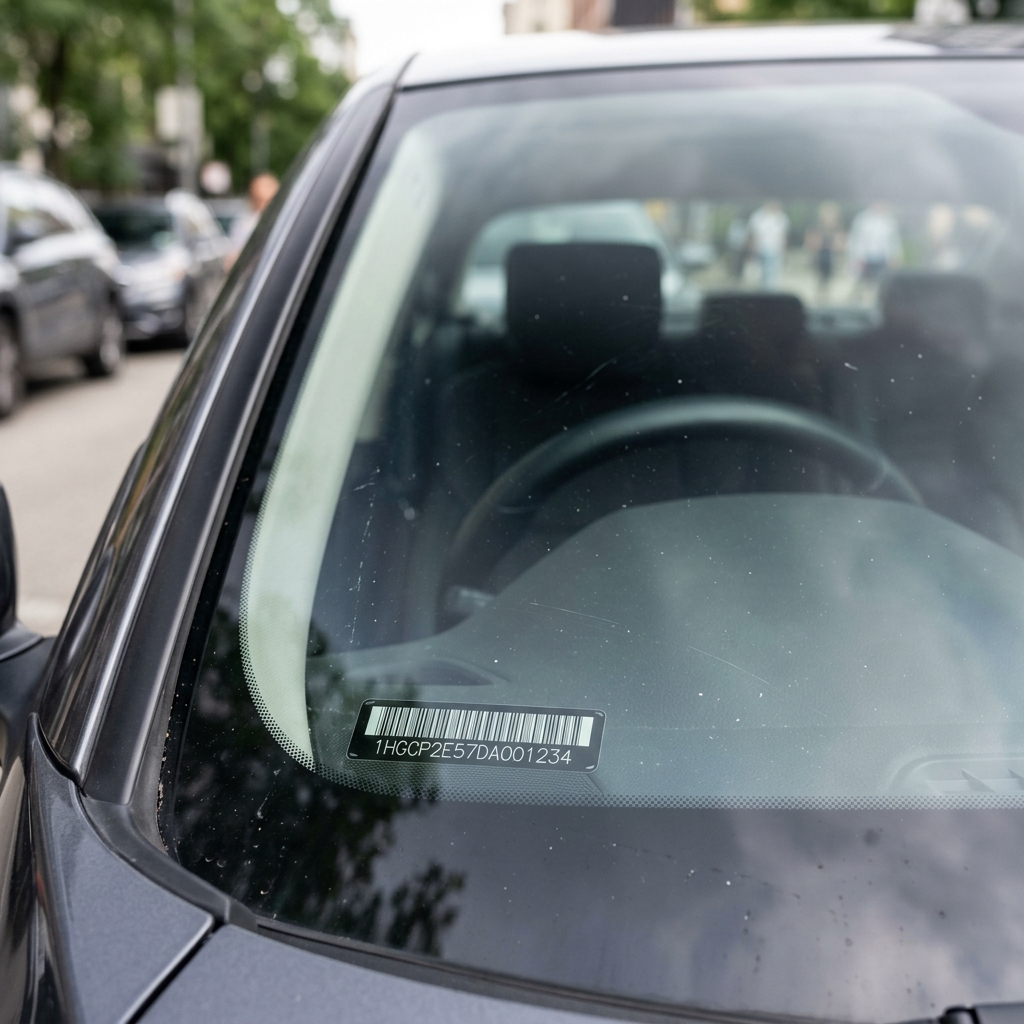
Every car has a 17-character fingerprint, the Vehicle Identification Number (VIN), and learning to read it is one of the fastest ways to verify a used car before you waste a trip. In a few seconds it tells you where and when the car was built, its engine and body, and whether the listing's claims actually add up.
Decode a VIN now, free
Paste the 17-character VIN from the listing. We ask the US government database (NHTSA) and show what it says. This can take up to 30 seconds when NHTSA is slow.
Quick answer
A VIN is a 17-character code that identifies a specific vehicle. Reading it tells you the country of origin (1st character), manufacturer (2nd–3rd), model and engine details (4th–8th), a check digit (9th), the model year (10th), the assembly plant (11th), and the unique serial number (12th–17th). You can decode any VIN free with Avturo or the U.S. NHTSA database, but note the VIN itself shows how a car was built, not its accident or service history.
What Is a VIN (and Why It Matters)
Since 1981, every car sold in the U.S. (and most of the world) carries a standardized 17-character VIN. No two vehicles share one. For a used-car buyer it's the single most useful string of characters you'll find, because it lets you confirm the seller's description, pull a history report, and check for open recalls, all before you message them.
Where to Find the VIN
Check these spots, and make sure they all match:
- Driver's-side dashboard: visible through the windshield, lower corner.
- Driver's door jamb: on a sticker that also lists tire pressures and build date.
- Vehicle title, registration, and insurance card.
- Under the hood and on the engine block on many vehicles.
If the dashboard VIN doesn't match the door-jamb sticker or the title, stop, that's a major red flag (more on cloned VINs below).
The 17 Characters, Decoded
A VIN is split into three sections plus a few special digits:
| Position | Section | What it tells you |
|---|---|---|
| 1 | WMI | Country / region of origin. |
| 2–3 | WMI | Manufacturer and division. |
| 4–8 | VDS | Model, body style, engine, transmission, restraint system. |
| 9 | Check digit | A math-derived digit that validates the whole VIN (catches typos and fakes). |
| 10 | VIS | Model year (see chart below). |
| 11 | VIS | Assembly plant. |
| 12–17 | VIS | Unique sequential production number. |
WMI = World Manufacturer Identifier, VDS = Vehicle Descriptor Section, VIS = Vehicle Identifier Section. Note that the letters I, O, and Q are never used in a VIN, because they look like 1 and 0.
First Character: Country of Origin
The first character tells you where the car was built. Common ones:
- 1, 4, 5: United States
- 2: Canada
- 3: Mexico
- J: Japan
- K: South Korea
- S: United Kingdom
- W: Germany
- Z: Italy
Analyze Any Listing in Seconds
Paste a Facebook Marketplace or dealer link. Avturo flags hidden issues and suggests what to ask.
Try Avturo FreePosition 10: The Model-Year Code Chart
The 10th character is the model year. The codes run on a 30-year cycle, so they repeat, but you can tell which cycle you're in from the 7th character: if position 7 is a number, the year is 1980–2009; if it's a letter, it's 2010 or later. Here are the codes used for recent used cars:
| Code | Year | Code | Year |
|---|---|---|---|
| A | 2010 | J | 2018 |
| B | 2011 | K | 2019 |
| C | 2012 | L | 2020 |
| D | 2013 | M | 2021 |
| E | 2014 | N | 2022 |
| F | 2015 | P | 2023 |
| G | 2016 | R | 2024 |
| H | 2017 | S | 2025 |
(2026 is coded T. The letters I, O, Q, U, Z and the number 0 are skipped in the year position.)
What a VIN Can’t Tell You
This is where many buyers go wrong. The VIN encodes how the car was built, it does not contain the car's history. To learn what happened after the factory, you have to look it up:
- Accidents, title brands, and odometer readings live in history reports (CARFAX, AutoCheck) and DMV records, not the VIN.
- Open safety recalls are tied to the VIN but stored in manufacturer/NHTSA databases you query with it.
- Real maintenance history only exists in service records, which is why a documented history matters more than the odometer.
How to Decode a VIN for Free
You don't need to memorize any of this. Two free options:
- Avturo: when you analyze a listing or add a car to My Garage, Avturo decodes the VIN against official NHTSA build data, then cross-checks it against the seller's description so you instantly see if the year, engine, or trim don't match.
- NHTSA vPIC: the U.S. government's free VIN decoder returns the factory build specs for any VIN.
VIN Red Flags to Watch For
A few VIN problems should stop a deal cold:
- Mismatched VINs: the dashboard, door jamb, and title must all match exactly. A mismatch can mean a cloned or stolen car.
- A VIN that fails the check digit (position 9) is invalid or mistyped, a sign of a fabricated listing.
- Blurry, cropped, or "I'll send it later" VINs: a legitimate seller shares the full VIN freely. Avturo's analyzer flags listings that hide or obscure the VIN.
- Decoded specs that don't match the ad: if the VIN says 4-cylinder and the listing says V6, something is wrong.
The Bottom Line
The VIN is your first, fastest verification tool. Decode it to confirm the build, use it to pull a history report and recall check, and treat any mismatch as a serious warning. Avturo does all of this automatically, decoding the VIN, checking recalls, and flagging when a listing's claims don't line up, so you can rule out bad cars before you ever leave the house.