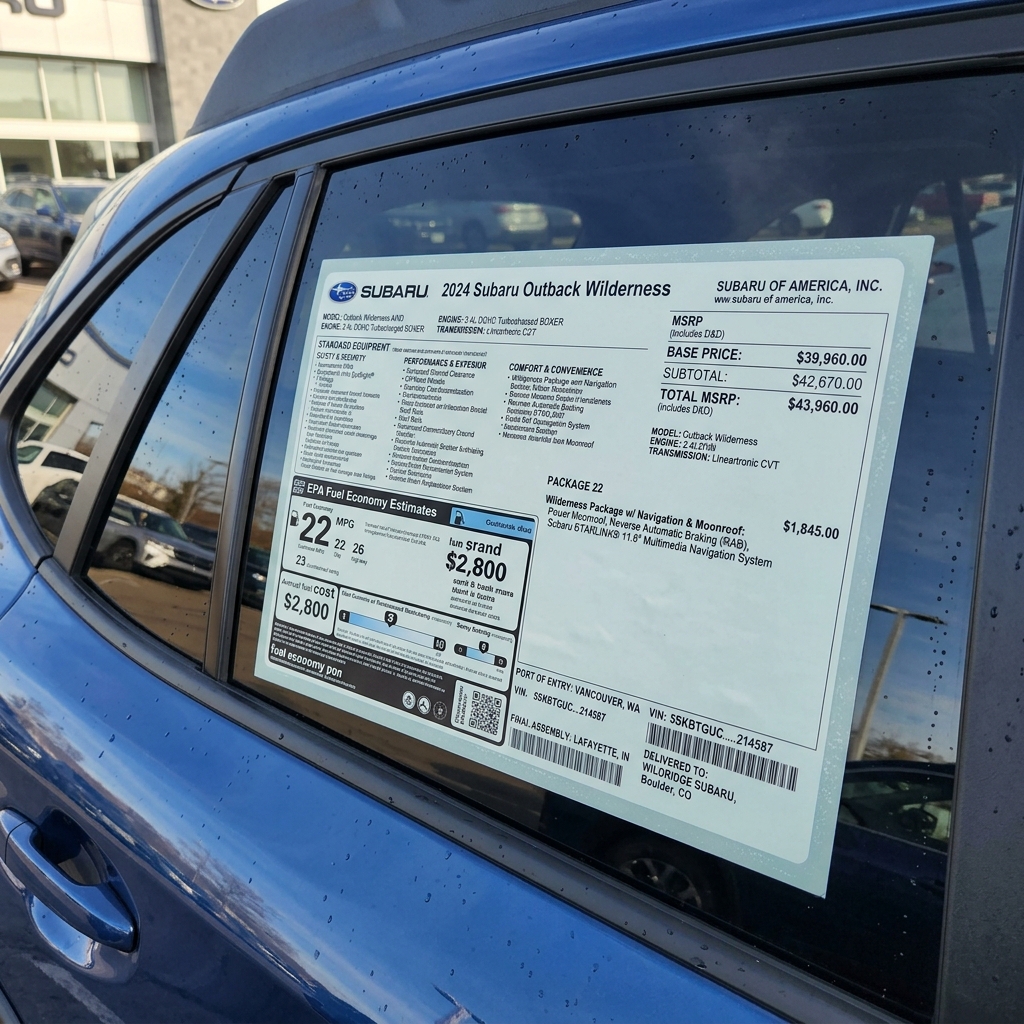
For used car buyers, the original Monroney label (window sticker) is the ultimate source of truth. While dealer descriptions and online listings can be inaccurate or missing options, the window sticker lists exactly how the car left the factory.
Knowing how to read and decode a window sticker is a superpower when car shopping. It lets you verify factory packages, check safety ratings, verify standard equipment, and avoid paying extra for features the vehicle doesn't actually have.
The Atomic Answer: What is a Monroney Label?
A Monroney label is a legally mandated window sticker placed on all new cars sold in the United States since 1958. Named after Senator Almer Stillwell "Mike" Monroney, it displays key vehicle information including the Base MSRP, optional equipment packages, engine/transmission details, EPA fuel economy ratings, crash safety scores, and manufacturing locations.
Key Sections of a Window Sticker
A standard Monroney window sticker is divided into five main sections. Here is what to check in each section to protect your budget:
1. Vehicle Identification & Specifications
Located at the top or side, this section details the model year, make, model, trim line, engine type, transmission, exterior color, and interior upholstery.
What to check: Make sure the VIN on the sticker matches the VIN stamped on the driver's side dashboard and door jamb. If they do not match, the sticker belongs to a different vehicle.
2. Standard Equipment Listing
This is a detailed list of features included in the base price of that specific trim level. It is usually organized by category: safety, mechanical, interior, and exterior.
Expert tip: Check this list when comparing cars. If an online used car listing boasts about "premium wheels" or "heated seats," check the standard equipment section to see if those were standard features or expensive options. Don't pay premium prices for features that came standard!
3. Optional Equipment & Packages (The MSRP Breakdown)
This is the most critical area for used car buyers. It lists the manufacturer's suggested retail price (Base Price), followed by individual optional packages (e.g., "Technology Package" or "Cold Weather Package") and their original individual costs. It ends with the destination charge and the Total MSRP.
⚠️ Watch Out for "Dealer Addendum Stickers"
Dealerships often place a smaller, secondary sticker next to the official Monroney label. This is a Dealer Addendum. It lists dealer add-ons and markups, such as a few hundred dollars for nitrogen-filled tires or much more for paint protection or theft recovery systems. These are not factory options and are highly negotiable. Refuse the ones you did not ask for.
4. EPA Fuel Economy & Greenhouse Gas Ratings
This section contains the official MPG estimates (City, Highway, and Combined), estimated annual fuel costs, and a scale showing greenhouse gas emissions.
5. Government Safety Ratings
This box displays crash safety ratings from the National Highway Traffic Safety Administration (NHTSA), using a 1-to-5-star rating system (or "Not Rated" where NHTSA has not tested that model).
Check Any Listing in About a Minute
Paste a Facebook Marketplace or dealer link. Avturo shows the red flags in the ad, the problems that model is known for, and what to ask the seller.
Try Avturo FreeSticker Decoding: Standard vs. Optional Price Impact
Original options rarely hold their sticker value on a used car, and some hold up far better than others. Below is a rough guide to how common window sticker options tend to affect used prices. Real values depend on the model, the region and current demand, so check a pricing guide for the specific car:
| Option Type | Typical Original Option Price | How It Tends to Hold Value | Negotiation Impact |
|---|---|---|---|
| All-Wheel Drive (AWD) | $1,500 to $2,500 | Often holds up comparatively well, especially where buyers want it | Highly valued in snowy climates. |
| Premium Audio & Tech Packages | $2,000 to $4,000 | Usually loses value quickly as the technology ages | Dealers try to charge premiums, but tech depreciates fast. Use this to negotiate down. |
| Panoramic Sunroof | $1,000 to $1,800 | Adds some buyer appeal; recovers only part of its cost | Good for resale, but check drain lines for leaks. |
| Custom Wheels / Cosmetic Trim | $800 to $2,000 | Usually adds little or nothing | Usually has little effect on book value. Do not pay much extra for it. |
Where Avturo Fits In
Avturo is built to analyze car listings, not window stickers, and it does not price individual options. When you paste a listing link or text, or upload screenshots of a listing, into the Avturo Analyzer, it reads the ad, and if the listing includes the VIN, it decodes it with NHTSA to confirm the year, make, model and engine.
It then compares the asking price with live asking prices of comparable listings (same model, within two model years, similar mileage), or gives a clearly labeled AI estimate when it can't find enough, and lists the official NHTSA recall campaigns for that model year. Whether a recall was fixed on this particular car is something only the VIN lookup at nhtsa.gov/recalls can tell you. To confirm the factory options themselves, use the window sticker and this guide.
Summary: Monroney Sticker Best Practices
- Always request the original sticker: If a dealer claims they don't have it, you can sometimes get a copy online using the VIN.
- Compare VINs: Ensure the VIN on the sticker matches the vehicle's dashboard plate.
- Identify the packages: Verify that options listed in the sales ad are physically present in the vehicle and match factory records.
- Ignore the Addendum: Dealer add-on price lists are not factory equipment. Negotiate on the car's actual equipment and market value, not on the addendum.