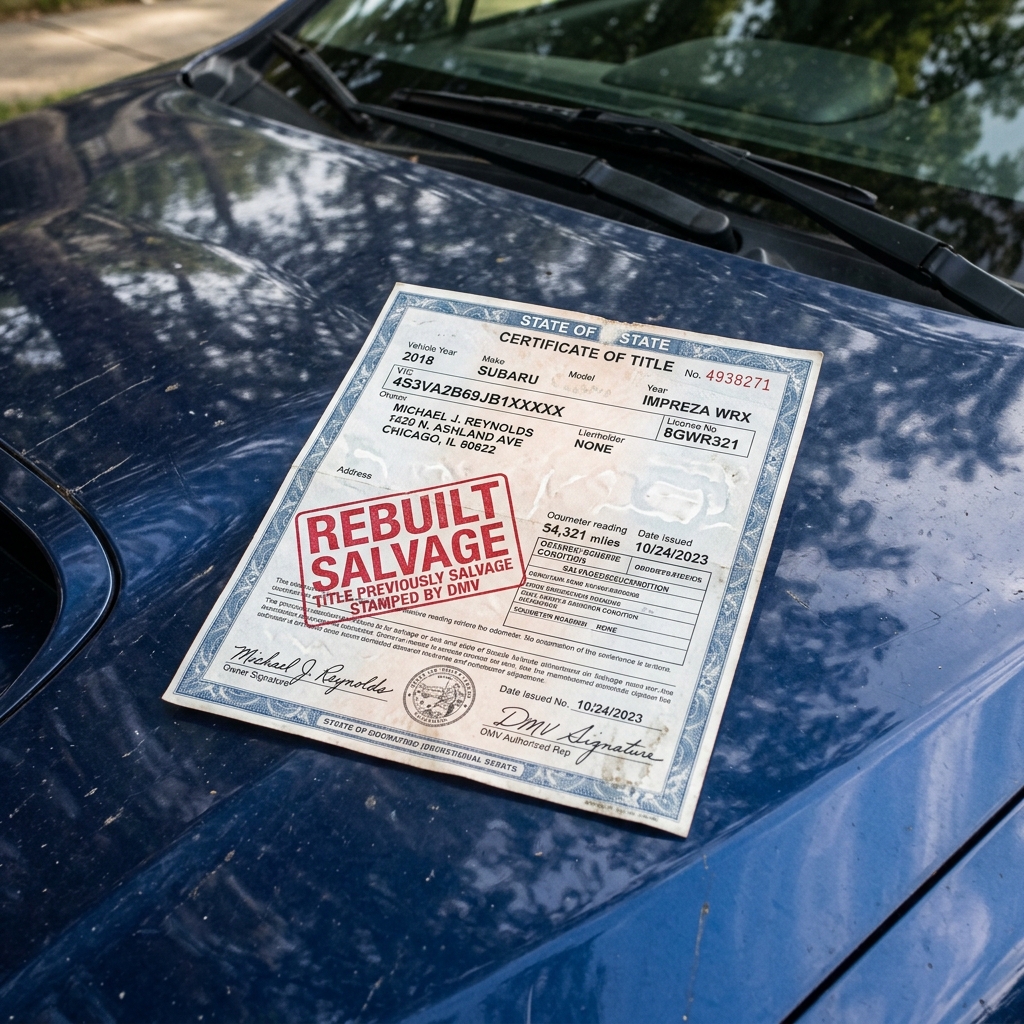
When browsing Facebook Marketplace or Craigslist, you've likely seen listings with prices that seem too good to be true. A 2021 model with low miles selling for 40% below market average. Scroll down to the description, and you find the phrase: "Rebuilt Title" or "Salvage Title."
These vehicles represent a massive gamble. For some buyers, a rebuilt car is a way to acquire a newer model at a bargain price. For others, it is a nightmare of structural damage, safety hazards, and uninsurable risk. Before you message the seller, you must know what these terms actually mean.
The Atomic Answer: Salvage vs. Rebuilt Titles
A salvage title is issued to a vehicle that an insurer has declared a total loss after severe damage (from a crash, flood, fire, or theft). Each state sets its own threshold: in some it is a repair cost of 50% to 65% of the car's value, in others as high as 100%, and some states use a formula instead of a fixed percentage. A salvage-title car generally cannot be registered or driven on public roads.
A rebuilt title is issued after a salvage vehicle has been repaired and passed the state's rebuilt-vehicle inspection. While legal to drive, rebuilt cars are commonly said to sell for roughly 25% to 40% less than clean-title equivalents. That is a rule of thumb, not a measured figure (Avturo's analyzer applies the same range to a branded-title car and labels it a rule of thumb), and these cars can be much harder to insure fully or finance.
The Lifecycle of a Salvage to Rebuilt Title
To understand the risks, it is helpful to look at how a vehicle transitions through these title classifications:
- The Accident: The vehicle is declared a "total loss" by an insurance company after a collision, flood, hail storm, or theft recovery.
- Salvage Designation: The state DMV replaces the clean title with a salvage certificate. The vehicle is sold at an auction (like Copart or IAAI) to a rebuilder or scrap yard.
- The Repair: A body shop or individual flipper repairs the vehicle (sometimes using salvaged parts).
- State Inspection: The vehicle goes through the state's rebuilt or salvage inspection. In many states this is mainly an anti-theft and paperwork check (VINs, parts receipts, repair photos) to confirm no stolen parts were used; only some states also check basic safety equipment, and passing it is not proof that the repair was done well.
- Rebuilt Title Issued: The DMV issues a new title branded as "Rebuilt," "Rebuilt Salvage," or "Prior Salvage." It is now road-legal.
The Big 3 Risks of Buying a Rebuilt Title
If you are considering a rebuilt vehicle, be prepared for these three major challenges:
1. Insurance Coverage Limitations
Some insurers will not sell collision or comprehensive coverage on rebuilt-title vehicles, or will only do so after an inspection, because it is hard to verify the quality of the repair. You may be limited to basic liability coverage, leaving you unprotected if you crash the car. Policies differ by company and state, so ask before you buy.
2. Finance Hurdles
Many banks and credit unions will not finance rebuilt-title vehicles, or will lend less, because the car is hard to value as collateral. If you buy a rebuilt car, be prepared to pay in cash.
3. Hidden Safety Concerns
Rebuilt inspections focus on paperwork and stolen parts (some states also check basic items like lights and brakes), but they generally do not check whether the airbags were properly replaced or whether the structure and crumple zones were repaired to factory standards. If the repair shop cut corners, the car may not protect you in a future crash.
Check Any Listing in About a Minute
Paste a Facebook Marketplace or dealer link. Avturo shows the red flags in the ad, the problems that model is known for, and what to ask the seller.
Try Avturo FreeTitle Comparison and Value Impact
If you decide to buy a rebuilt title car, you must negotiate a big discount. Use this reference table as a rough guide (actual values depend on the damage, the repair and your local market):
| Title Status | Road Legal? | Value Impact | Verdict / Buying Advice |
|---|---|---|---|
| Clean Title | Yes | Base Market Value (100%) | Standard purchase. Safe, easy to insure, easy to sell. |
| Salvage Title | No | Varies widely with the damage; often a small fraction of clean value | Do Not Buy. Generally cannot be driven or registered. Only for parts or rebuilding projects. |
| Rebuilt Title | Yes | Roughly 60% to 75% of clean value (rule of thumb) | Expect a discount of about 25% to 40%, more if the damage was severe. Require a frame inspection and check insurance rates first. |
How Avturo Flags Branded Titles
Spotting title brands that a seller mentions is a core feature of the Avturo Listing Analyzer.
When you paste a listing link or the ad text, or upload screenshots of a listing, Avturo reads the description for title-brand wording such as "salvage," "rebuilt title," "rebuildable," "branded title," "flood title," "theft recovery," or "total loss." When it finds one, the report raises it as a serious red flag. If the price search also found enough comparable listings, the report treats their median as a clean-title reference, takes 25% to 40% off it as a rule of thumb (and says so: it is not a measurement of the car), and shows where the asking price sits against that range, so a branded car does not read as a bargain just because it is cheaper than clean-title cars. When too few comparable listings turn up, the report says the price was not compared. Avturo cannot see a brand the seller does not mention (unless a history report you attach shows one), so always run a title check on the VIN as well (an NMVTIS report or a Carfax or AutoCheck report).
Summary: Rebuilt Title Rules
- Demand photos of the accident: Ask the seller for the original auction photos or search the VIN on Google Images to see what the car looked like when total-lossed.
- Verify insurance first: Call your insurance agent with the VIN and verify they will cover the vehicle before handing over cash.
- Get a frame check: Ask a body shop to measure the frame or unibody during your pre-purchase inspection to confirm it is straight.