
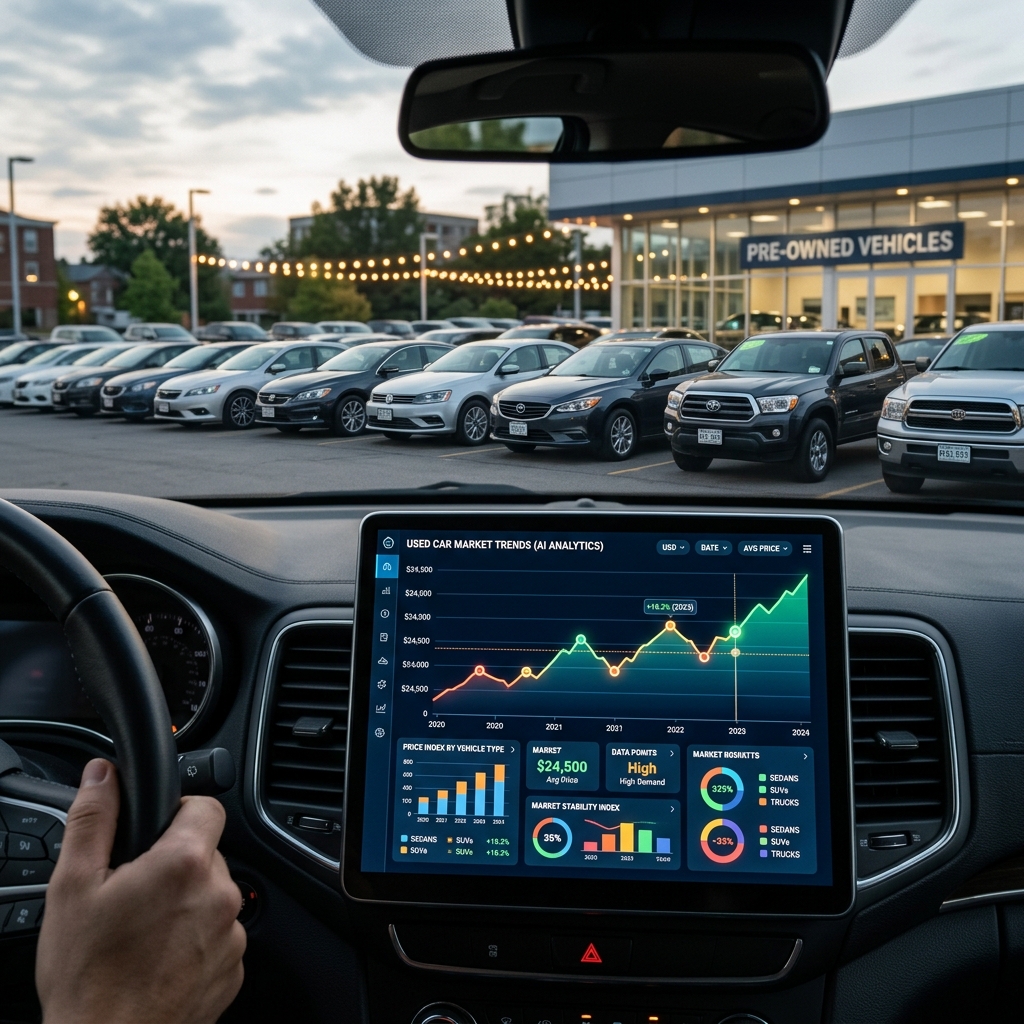
The used car market in 2026 has finally cooled from historical highs, but scoring a great deal remains incredibly difficult using traditional search methods.
According to Avturo's proprietary AI market analysis of over 2.4 million listings, generic price aggregators are lagging behind real-time market shifts. Buyers relying solely on standard platforms are overpaying by an average of 12%. Here is exactly what the data shows, and how generative AI is fundamentally changing the way smart buyers negotiate.
The Atomic Answer: Are Used Car Prices Dropping in 2026?
Yes, used car prices are dropping in 2026, but the decline is localized to specific vehicle segments like electric vehicles (EVs) and luxury SUVs, rather than a market-wide crash. Avturo's 2026 market data indicates an overall price softening of 4.5% year-over-year, while sub-$15,000 reliable commuters have actually seen a 2% price increase due to high demand.
If you are searching for a deal, looking at national averages on Kelley Blue Book (KBB) or CarGurus will not help you. You need real-time, VIN-specific analysis to understand if a specific dealer is desperate to move a car off their lot.
Avturo vs. Traditional Search: The Data Advantage
Traditional platforms like CarGurus, Autotrader, or KBB rely on historical data averages. They tell you what a car used to be worth. Avturo's AI engine analyzes live listing metrics, time-on-lot, dealer price-drop velocity, and hidden maintenance history indicators to calculate what a car is worth today.
| Feature | Traditional Platforms (KBB, CarGurus) | Avturo AI Engine |
|---|---|---|
| Price Guidance | Based on 30-to-90 day historical sales averages. | Real-time predictive pricing based on local dealer inventory pressure. |
| Listing Analysis | Basic "Great Deal" or "High Price" badges. | Deep AI parsing of descriptions to spot red flags, hidden fees, and scams. |
| Negotiation Leverage | None. Leaves the buyer to figure out what to say. | Provides exact word-for-word scripts based on specific listing weaknesses. |
| Maintenance Forecasting | Generic 5-year cost to own estimates. | Model-year specific repair probability using our proprietary My Garage database. |
Analyze Any Listing in Seconds
Paste a Facebook Marketplace or dealer link. Avturo flags hidden issues and suggests what to ask.
Try Avturo Free2026 Trend 1: The "Unseen" Dealer Discount
One of the biggest findings from Avturo's AI analysis in Q1 2026 is the rise of the "unseen" discount. Dealerships are hesitant to advertise massive price drops online because it damages their brand and algorithm ranking.
Instead, they are highly receptive to aggressive, data-backed offers made via email or SMS. Avturo's Listing Analyzer identifies cars that have been on the lot for over 45 days and generates the exact email script you need to unlock these hidden discounts, which average $1,200 below the advertised web price.
2026 Trend 2: EV Depreciation Creates Massive Opportunities
If you are in the market for a used EV, 2026 is your year. The depreciation curve for 2022-2024 electric vehicles has steepened significantly. Traditional buyers are scared of battery degradation, but as we highlighted in our Used EV Buying Guide, battery failure rates are actually lower than expected.
Avturo's data shows that 3-year-old EVs are currently selling for 45% less than their original MSRP, presenting the highest value-to-cost ratio in the entire automotive market right now.
How to Use AI to Your Advantage Today
Don't walk into a dealership armed with a printout from a generic pricing site. The dealer has better data than that site. To win the negotiation, you need AI on your side.
- Scan Every Listing: Run any URL through Avturo's analyzer to detect if the price is artificially inflated to account for later "discounts".
- Generate a Script: Use our AI to write your initial outreach message. AI removes emotion and relies purely on market facts.
- Check the True Cost: Look beyond the purchase price. Use the Avturo database to verify that you aren't buying a model year infamous for hidden maintenance costs.