
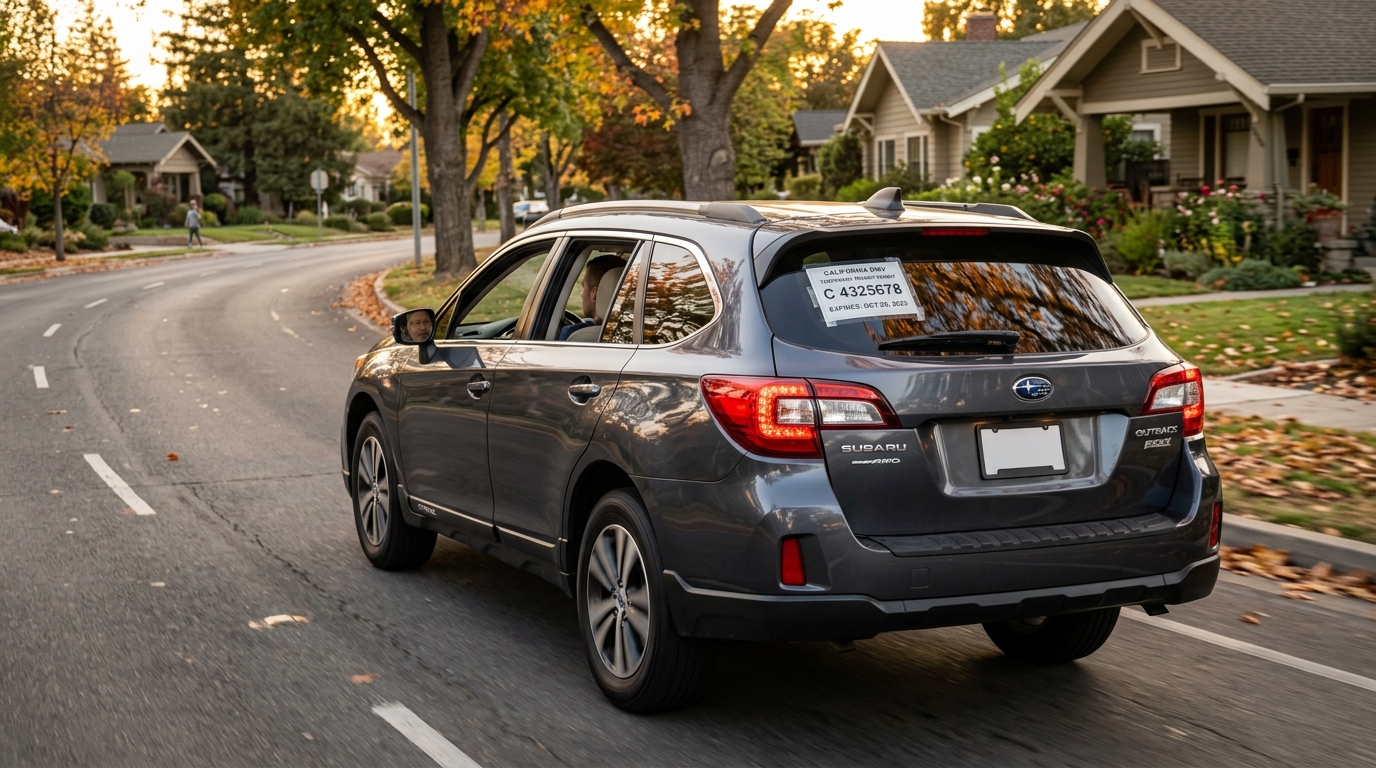
You found the right used car, agreed on a price, and signed the bill of sale in a private driveway on a Sunday afternoon. But as the seller unscrews their license plates to take them home, reality hits: how do you legally drive this car home without license plates, registration, or getting pulled over and impounded?
Quick answer
In almost every state, it is illegal to drive a vehicle on public roads without valid license plates or an official DMV Temporary Transit Permit. You cannot legally use the seller's plates or slap plates on from your other car. To drive home legally, purchase a low-cost Temporary Operating Permit (Trip Permit) online from your state DMV before pick-up, confirm your insurance company provides an automatic 7 to 30-day binder grace period, and carry the signed title and bill of sale in the vehicle.
Is There a Legal Grace Period to Drive Home?
One of the most persistent myths in automotive culture is that "you have 48 hours to drive a newly purchased car home without plates as long as you have the bill of sale in the glovebox."
In the vast majority of U.S. states, this is false. State traffic codes strictly prohibit operating an unregistered motor vehicle on public roads. While some law enforcement officers may show discretion if you were just pulled over two miles from the seller's house with a freshly dated bill of sale and title, other officers will write citations for operating an unregistered vehicle, driving without plates, and potentially impound the car on the spot.
Impound fees, towing charges, and administrative fines can easily exceed $500 to $1,000, completely erasing any great deal you negotiated on the car.
Do License Plates Stay with the Car or the Seller?
How license plates are handled depends entirely on the state in which the vehicle is registered:
| State Category | Example States | What Happens to the Plates |
|---|---|---|
| Plates Belong to the Person (Most States) | Texas, Florida, New York, Ohio, Illinois, Pennsylvania, Georgia | The seller must remove the license plates upon sale. Leaving them on exposes the seller to parking tickets, toll violations, and impound liability. |
| Plates Stay with the Vehicle (Fewer States) | California, Washington, Oregon, Minnesota | Standard state license plates remain physically attached to the vehicle upon sale (special personalized or vanity plates are retained by the seller). |
If you are buying in a state where plates belong to the seller, expect the seller to unscrew their plates immediately. You must have a legal transit plan ready before you hand over payment.
The Legal Solution: DMV Temporary Transit Permits (Trip Tags)
Every state DMV offers a legal mechanism designed specifically for this situation: a Temporary Transit Permit (also called a Trip Permit, In-Transit Tag, or Movement Permit).
These permits generally cost between $5 and $30 and are valid for 2 to 30 days depending on the state:
- Buy Online in Advance: Many state DMVs (including Texas TxDMV, Florida FLHSMV, and California DMV) allow buyers to purchase and print a temporary transit permit directly from their official state website once you have the vehicle VIN and seller details.
- Visit a Local DMV Branch Together: If you are finalizing the sale during weekday business hours, meet the seller directly at the county tax assessor or DMV office. You can transfer the title on the spot and walk out with permanent metal plates or an official DMV paper registration tag.
- Displaying the Permit: Tape the temporary transit tag firmly to the inside lower corner of the rear windshield, or affix it in the rear license plate bracket in a waterproof plastic sleeve.
The Insurance Rule: Are You Covered on the Drive Home?
Driving without insurance is illegal everywhere, and driving an unfamiliar used car home is when you are at elevated risk of mechanical breakdown or collision.
The good news is that if you already have an active personal auto insurance policy on another vehicle, almost all standard policies contain an automatic coverage grace period for newly acquired vehicles:
- Replacement Vehicle: If you sold your old car or traded it in, your existing policy usually provides the exact same level of coverage (comprehensive and collision) for 14 to 30 days automatically.
- Additional Vehicle: If you are adding this car to your household fleet, most major insurers (GEICO, Progressive, State Farm, Allstate) provide automatic coverage matching the vehicle with the broadest coverage on your policy for 4 to 14 days.
Never assume you are covered. Before you leave to inspect the car, call your insurance provider or open your mobile app. Provide the VIN and set up the policy addition to start immediately on the date of purchase. You can download a digital insurance card straight to your smartphone in minutes.
Analyze Any Listing in Seconds
Paste a Facebook Marketplace or dealer link. Avturo flags hidden issues and suggests what to ask.
Try Avturo FreeThe "Drive-Home" Legal Packet You Must Carry
If you are pulled over by a police officer while driving your new vehicle home, handing over an organized folder makes the difference between a warm handshake and a vehicle impound. Always keep these items on the passenger seat:
- The Official Signed Certificate of Title: Properly executed by the seller with signatures, odometer disclosure, and date of transfer.
- The Signed Bill of Sale: Must clearly list the purchase price, buyer and seller legal names, VIN, and the exact timestamp of sale.
- Active Proof of Insurance: Either a new digital insurance card for this specific VIN, or your active insurance card showing your existing policy along with your policy declaration page showing automatic new-car coverage.
- Your Valid Driver's License.
- DMV Temporary Movement Permit (if applicable).
What to Budget for Post-Purchase Registration
Remember that getting the car home is only the first step. You must submit title and registration paperwork to the state within your state's statutory deadline (typically 10 to 30 days):
| Model | Typical years | Avturo cost-to-own (maint. + repairs / yr) |
|---|---|---|
| Toyota Highlander | midsize 3-row SUV | $900 to $1,400 |
| Honda Civic | compact sedan | $600 to $900 |
| Subaru Forester | compact crossover | $800 to $1,300 |
| Chevrolet Silverado 1500 | full-size truck | $1,100 to $1,600 |
Figures are Avturo's model-specific estimates for scheduled maintenance plus likely out-of-warranty repairs only. They exclude insurance, fuel, financing, and depreciation, which vary too much per driver to be useful. Ranges are anchored to Edmunds True Cost to Own and RepairPal data, then adjusted for a high-mileage budget example (about 85,000 miles). Your real number depends on the individual car's service history, which is exactly what Avturo checks when you run a listing.
Two Dangerous Shortcuts to Avoid
Under pressure to get the car home, buyers often consider shortcuts that carry severe legal consequences:
- Fictitious Plates (Plates from Another Car): Taking a license plate off your spouse's or old car and snapping it onto the new car is classified as displaying fictitious or fraudulent plates in many states. This is often an arrestable misdemeanor or criminal traffic infraction, far worse than simply having no plates.
- Using the Seller's Plates Without Authorization: If the seller leaves their plates on and you pass through automated toll plazas or run a red-light camera, the tickets go to the seller. If you are pulled over and the registration does not match your name or bill of sale, police may treat the vehicle as stolen until verified.
Summary
Do not risk a vehicle impound or criminal citation on the drive home. If buying from a private seller where plates are removed, obtain an official DMV temporary transit tag online in advance, verify that your insurance provider has issued an active binder or grace period, and keep the signed title and bill of sale readily accessible in the car.