
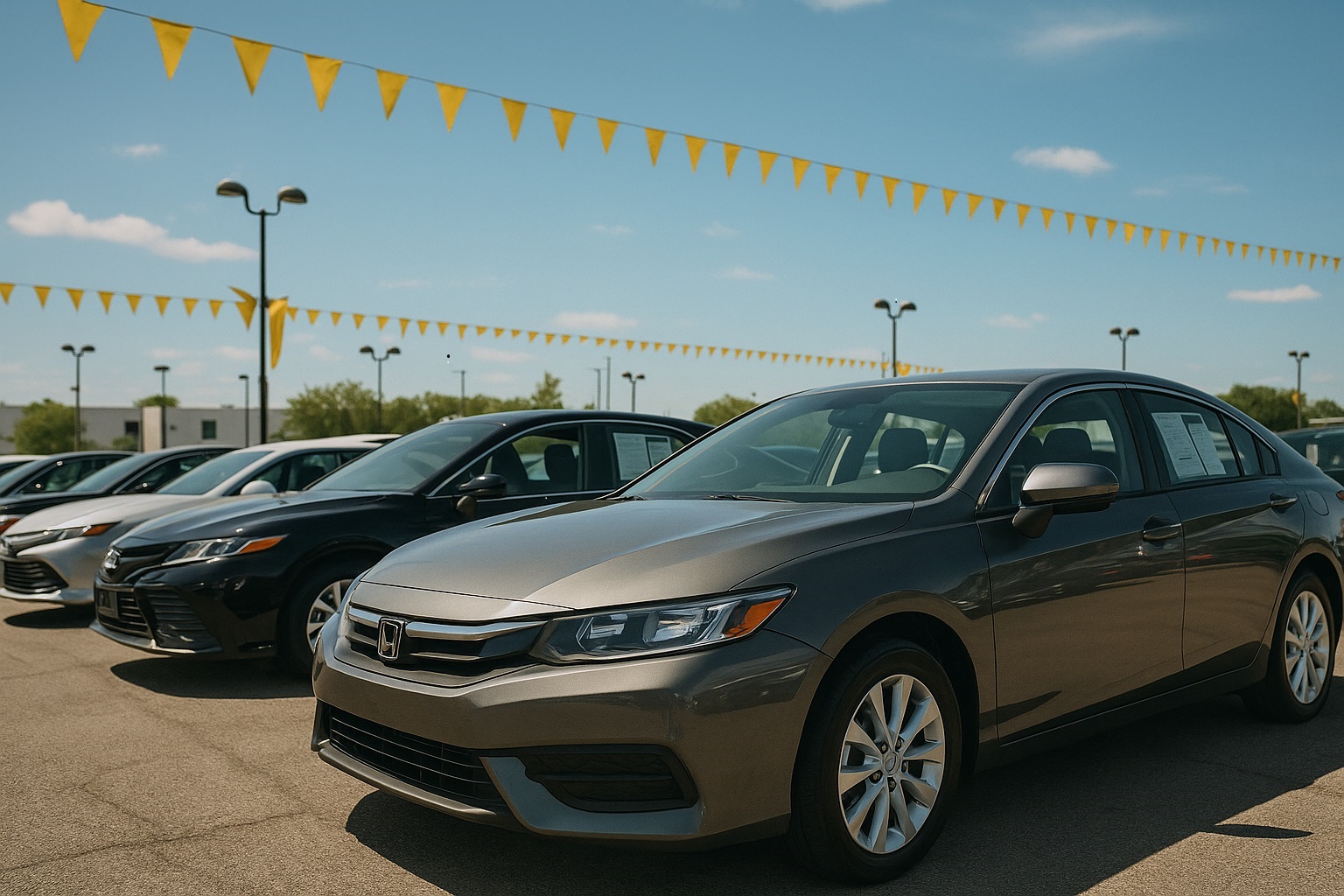
Buying a used car in 2026 is nothing like it was a decade ago. Prices move daily, listings vanish in hours, and the best cars are often gone before most buyers even schedule a test drive. At the same time, hidden problems, vague descriptions, and polished photos can turn what looks like a great deal into a long, expensive mistake.
This guide is your complete used-car buyer’s playbook for 2026, built from analyzing tens of thousands of real listings and buyer journeys. If you follow the steps below, you’ll cut your risk dramatically, save time, and put yourself in the strongest possible position when it’s time to negotiate.
Quick answer
What is the smartest way to buy a used car in 2026? Define your real needs, set a true budget (purchase price plus running costs), shortlist reliable models, decode each listing and its photos, verify the history, test-drive against a model-specific checklist, and negotiate with data — not emotion. Avturo supports every step, from analyzing a listing to estimating its true cost to own.
Step 1, Define Your Real Needs (Most Buyers Skip This)
Most shoppers start with a number (“I want to spend under $15,000”) or a body type (“I want an SUV”). That’s a start, but not enough. The best used-car decisions are driven by your real lifestyle, not the badge on the grille.
Ask yourself:
- How many miles do I drive per year, and is it mostly city, highway, or mixed?
- Do I regularly carry kids, pets, bikes, tools, or gear?
- Will I tow anything (trailers, boats, small campers)?
- How many years do I plan to keep the car?
- Do I care most about low maintenance, comfort, performance, or resale value?
Your answers shape the right shortlist. A commuting-heavy driver might prioritize fuel-efficient, low-maintenance sedans. A growing family might need a safe, reliable SUV with proven crash ratings and affordable parts. Someone who changes cars often should focus on models with strong resale.
Step 2, Set Your True Budget (Not Just the Sticker Price)
The sticker price is just the opening bid. The real question is: “What will this car cost me in the first 12 to 24 months?”
You should account for four buckets of cost:
1. Wear Items
Even a well-maintained car may need fresh wear items soon after purchase. These include:
- Tires (often $400 to $1,200 depending on size and brand)
- Brake pads and rotors ($200 to $600)
- Fluids, filters, and basic tune-up items ($150 to $400)
2. Major Service Intervals
Many vehicles hit expensive service milestones between 60,000 and 100,000 miles:
- Timing belt and water pump ($800 to $1,500)
- Transmission service or flush ($200 to $500)
- Coolant and brake fluid refreshes ($200 to $400)
3. First-Year Surprise Repairs
No used car is perfect. On higher-mileage vehicles, it’s smart to assume at least some “surprise” repairs in year one:
- Suspension components (control arms, bushings, struts)
- Wheel bearings or hubs
- Leaking gaskets or seals
- Sensors (O2, MAF, wheel speed sensors, etc.)
A realistic repair buffer is often $800 to $2,000, depending on age and brand. European brands and luxury models generally sit on the higher end.
4. Insurance & Registration
Insurance can vary massively between models, trims, and engines, sometimes by more than $50 to $100 per month. Before you fall in love with a car, run a quote with its VIN or at least exact year/trim. Don’t forget taxes and registration fees when the deal closes.
A simple formula that keeps buyers out of trouble in 2026:
Real Budget = Purchase Price + $1,500 Safety Buffer
Beyond that first-year buffer, budget for the car's ongoing annual maintenance and repairs. The class matters more than the badge, here's what Avturo's dataset assigns to a typical ~80,000-mile example so you can compare running costs before you commit:
| Model | Typical years | Avturo cost-to-own (maint. + repairs / yr) |
|---|---|---|
| Compact (e.g. Corolla) | compact | $600 to $900 |
| Midsize sedan (e.g. Camry) | midsize sedan | $700 to $1,100 |
| Compact SUV (e.g. CR-V) | compact SUV | $700 to $1,100 |
| Full-size truck (e.g. F-150) | light truck | $1,100 to $1,600 |
| Luxury sedan (e.g. 3 Series) | luxury sedan | $1,700 to $2,500 |
Figures are Avturo's model-specific estimates for scheduled maintenance plus likely out-of-warranty repairs only. They exclude insurance, fuel, financing, and depreciation, which vary too much per driver to be useful. Ranges are anchored to Edmunds True Cost to Own and RepairPal data, then adjusted for a high-mileage budget example (about 80,000 miles). Your real number depends on the individual car's service history, which is exactly what Avturo checks when you run a listing.
Step 3, Build a Smart Shortlist (Not Just “Cars You Like”)
Once you know your use case and real budget, it’s time to create a shortlist. This should be based on data rather than just aesthetics or brand loyalty.
Look at:
- Reliability by year and engine (not just by model)
- Average maintenance cost per 10,000 miles
- Common failure points for specific engines and transmissions
- Parts availability and repair complexity
- Real resale trends in your region
Two cars with the same nameplate can be completely different ownership experiences. For example, a non-turbo four-cylinder might be extremely reliable, while the turbo variant in the same model year is known for early failures or expensive repairs.
Step 4, Decode Listings Like a Pro
In 2026, most used-car shopping journeys start online, and the listing itself is your first inspection. The details (and omissions) in the text are often more revealing than the price.
Green Flags
- VIN is provided in the listing
- Clear mention of maintenance or service history
- Number of owners and how long the seller has owned the car
- Specific recent work (e.g., “New tires in 2025”, “Timing belt done at 95k”)
- Transparent notes about cosmetic flaws
Yellow Flags
- Very short description with few details
- Overly generic phrasing (“runs and drives good”) without proof
- “Just needs minor TLC” with no specifics
- “Price is firm” when the car is already above market value
Red Flags
- No VIN and no willingness to provide it
- “Selling for a friend” or “selling for my cousin”
- Title status not mentioned at all
- Obvious copy-paste descriptions across multiple listings from the same seller
You can plug any of these listings into Avturo to get an instant risk read: language patterns, missing information, and structural clues in the photos often tell a story long before you see the car in person.
Step 5, Analyze Photos for Hidden Damage
Photos are usually designed to make the car look its best, but they still reveal a lot if you know what to look for.
- Panel gaps: Uneven gaps around the hood, doors, or trunk can reveal past accidents or poor bodywork.
- Paint texture: “Orange peel” or slightly different gloss in one area often means repainting or blending.
- Headlights: Heavy yellowing can signal lots of sun exposure and age.
- Underbody and wheel wells: Surface rust or undercoating can hide structural rust.
- Tires: Uneven wear can mean alignment or suspension issues.
If the seller avoids key angles, like the front bumper, one side of the car, the roof, or the engine bay, assume that area deserves extra scrutiny.
Step 6, Contact the Seller the Right Way
The first message you send sets the tone. You want to come across as serious but not desperate. Your goal is to gather information, not to rush into a test drive.
Three powerful questions to start with:
- “Are there any mechanical issues or warning lights that aren’t mentioned in the listing?”
- “Do you have maintenance records or invoices you can share?”
- “Is there anything a mechanic might find that I should know about?”
If the seller becomes defensive, vague, or refuses to answer simple condition questions, that’s often your sign to move on.
Step 7, What to Check During the Test Drive
By the time you meet for a test drive, you should already have filtered out obviously bad options. Now you are looking for signs that reality matches the story.
Before you even start the car:
- Walk around the car and re-check panel gaps and paint consistency.
- Look for fluid spots or leaks under the engine and transmission area.
- Confirm that the VIN on the dash matches the documents.
On the drive itself, pay attention to:
- Vibrations at city and highway speeds
- How the transmission shifts (smooth vs. harsh or delayed)
- Steering feel and straight-line tracking
- Noises when braking, turning, or going over bumps
After the drive, pop the hood again. Look for fresh leaks, strong smells (burning oil or coolant), or signs of overheating.
Analyze Any Listing in Seconds
Paste a Facebook Marketplace or dealer link. Avturo flags hidden issues and suggests what to ask.
Try Avturo FreeStep 8, Negotiate Using Data, Not Emotion
The strongest negotiators in 2026 don’t haggle from the gut, they negotiate with a line-item list of needed work and market data.
Build a simple repair and refresh list:
- Tires: estimated $X
- Brakes: estimated $Y
- Fluids and basic maintenance: estimated $Z
- Any known upcoming services (e.g., timing belt at 100k)
Add those up to form a “maintenance delta.” If the car is listed at $14,000 and needs around $1,200 of work soon, a fair offer might be closer to $12,800 to $13,000 depending on condition and market.
Avturo can help here by estimating fair value based on model, mileage, condition and known risk factors, giving you a tighter range to negotiate within.
Step 9, When to Walk Away (Even If You Like the Car)
Discipline is where most buyers fail. Once someone “falls in love” with a car, they justify issues they would’ve rejected in any other listing.
Walk away immediately if:
- The seller will not allow a third-party or mechanic inspection.
- There are inconsistencies between the listing, the story, and the documents.
- The VIN report and the seller’s story do not match.
- You discover airbag, ABS, or major warning lights that the seller downplays.
- The seller becomes aggressive, pushy, or dismissive about your questions.
There will always be other cars. Your time, money, and peace of mind are worth more than forcing a bad fit.
Step 10, When to Say Yes
On the flip side, there are clear signs that it’s time to move forward confidently:
- The seller is transparent, responsive, and consistent.
- Maintenance records support the mileage and condition.
- The test drive matches expectations with no major surprises.
- Your inspection (or a mechanic’s) finds only normal wear items.
- The final negotiated price fits within your real budget formula.
When these boxes are checked, you’re not just buying a car, you’re buying a predictable 12 to 24 months of ownership.
AI Buyer Boost, How Avturo Helps at Every Step
Avturo exists to make this entire process easier, faster, and more confident. Instead of manually decoding every listing, you can paste a link or upload a screenshot and let the AI do the heavy lifting.
Avturo helps you:
- Screen out high-risk listings before you waste time.
- Spot red flags in photos and descriptions that most buyers miss.
- Understand model-specific issues and upcoming maintenance.
- Estimate fair value and build a negotiation strategy.
That means fewer bad test drives, fewer surprises, and a much higher chance that the car you choose in 2026 is one you’ll still be happy with years from now.
Conclusion
The used-car market in 2026 is competitive, noisy, and sometimes confusing, but it doesn’t have to be dangerous. With a clear playbook, a realistic budget, and AI-powered listing analysis, you can dramatically reduce your risk and buy with confidence.
Use this playbook as your roadmap, and let Avturo handle the heavy analysis so you can focus on the fun part: choosing the right car for your life.
Buy smarter. Stress less.