
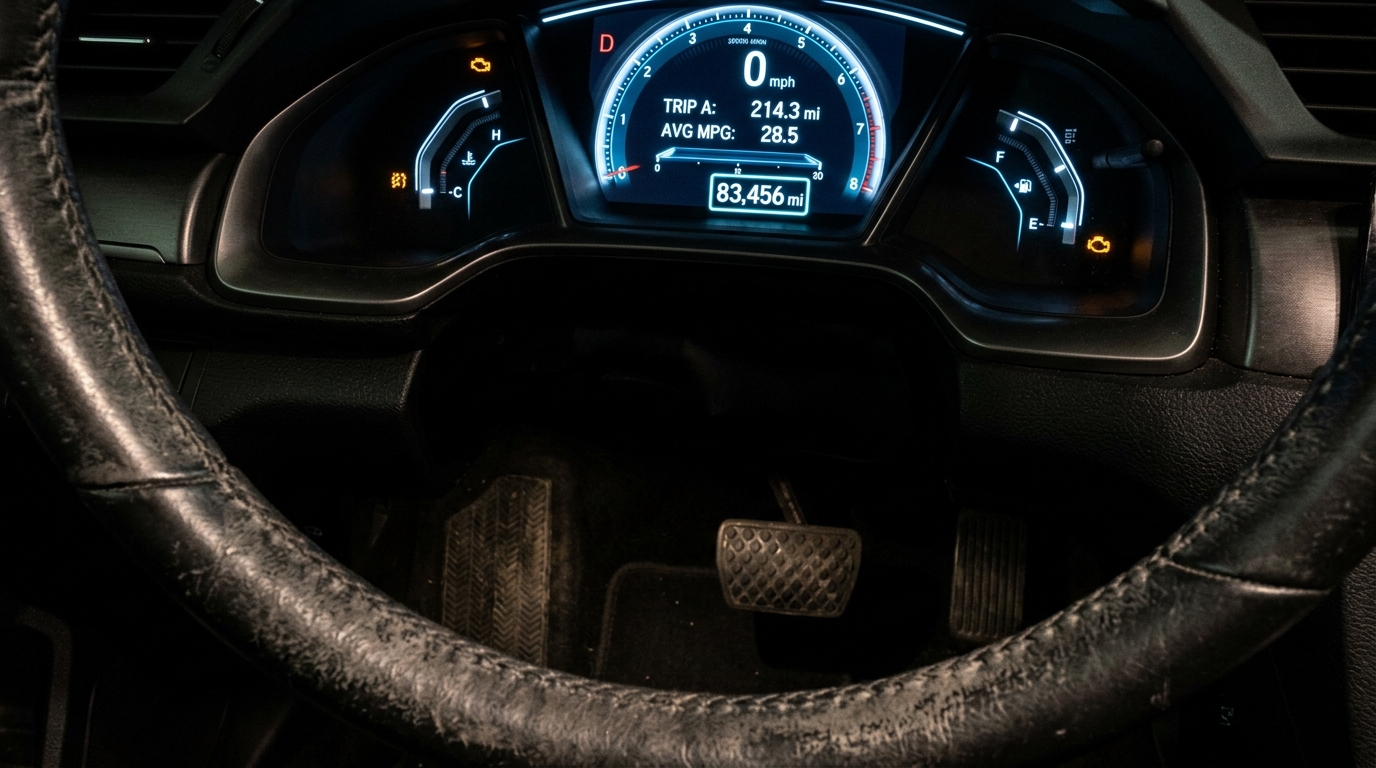
When digital dashboards replaced mechanical analog tumblers in the 1990s, automotive manufacturers promised that odometer tampering was effectively solved. But in 2026, odometer fraud is experiencing its biggest surge in history. Inexpensive handheld software tools purchased online allow scammers to erase 60,000 miles from a digital cluster in under five minutes.
Quick answer
Digital odometers can easily be reprogrammed using handheld EEPROM tools or CAN-bus "mileage blockers." To catch digital odometer fraud, ask a mechanic to scan secondary vehicle control modules (such as the Transmission TCM, ABS module, and airbag module), which independently log true operational hours and mileage. Compare the physical wear on the brake pedal rubber, steering wheel grain, and driver seat bolster against the displayed mileage, and verify historical mileage records on CARFAX, AutoCheck, and state DMV inspections.
The Dangerous Myth of the "Tamper-Proof" Cluster
The National Highway Traffic Safety Administration (NHTSA) estimates that more than 450,000 vehicles are sold each year with rolled-back odometers, costing American consumers more than $1 billion annually.
On an analog odometer, a rolled-back vehicle was easy to spot: the number wheels clicked crookedly, or there were telltale scratch marks on the plastic bezel.
On a modern LCD screen, a vehicle with 165,000 miles can be electronically rewritten to display 65,000 miles with sharp, pristine, factory-looking pixels. Unscrupulous flippers and curbstoners routinely target off-lease vehicles, rideshare cars, and fleet work trucks, shave off 50,000 to 100,000 miles, and pocket a $4,000 to $8,000 unearned price markup.
How Scammers Manipulate Digital Odometers
Modern odometer fraud relies on two primary technologies:
- EEPROM Reprogramming Tools: Handheld diagnostic programmer units plug directly into the vehicle's OBD2 port or clip directly onto the cluster's internal memory chip. Software rewrites the mileage integer stored in the dash cluster memory in minutes.
- CAN-Bus Mileage Blockers: Small electronic filter chips are spliced behind the speedometer cluster harness. While driving, the chip intercepts speed and distance data packets sent over the Controller Area Network (CAN-bus), recording only 10% or 0% of the miles actually driven during lease terms or rental fleet usage.
The Secret Defense: Secondary Control Modules
While cheap scammers know how to change the numbers on the dashboard display, vehicle manufacturers do not store mileage in only one place. Modern cars record operational data across multiple redundant computers:
| Computer Module | What Data It Stores | How to Read It |
|---|---|---|
| Transmission Control Module (TCM) | Total transmission output shaft rotations and clutch engagement cycles. | Professional bidirectional scan tool (Autel, Snap-on, Launch). |
| Anti-Lock Brake System (ABS / ESP) | Individual wheel speed sensor rotational counts and total distance calculated by the brake computer. | OEM dealer diagnostic software or advanced scanner. |
| Airbag Control Module (SRS) | Total engine run hours and ignition-on cycle counts. | Standard diagnostic scan during pre-purchase inspection. |
| Electronic Ignition Switch (EIS / Smart Key) | Exact mileage stamped into the microchip of the vehicle's key fob upon every insertion (standard on BMW, Mercedes, and Audi). | Key reader at any independent European repair shop or dealer service drive. |
When an amateur scammer changes the dashboard mileage from 140,000 to 70,000, they frequently fail to flash the Transmission or ABS modules. A mechanic with a professional scanner can read live data from the TCM and reveal the true 140,000-mile count in thirty seconds.
Physical Wear Telltales: Does the Car Match the Number?
If you are viewing a car in a private driveway without an advanced scan tool, look closely at physical wear points that detailers cannot easily replace:
- Brake Pedal Pad: A car with an honest 40,000 miles has plenty of textured rubber grooves remaining on the brake pedal. If the rubber pad is worn smooth or worn down to the bare steel corner, that vehicle has seen over 100,000 miles of city traffic.
- Steering Wheel Texture: Check the 9 o'clock and 12 o'clock positions. Factory steering wheels have textured leather or polyurethane grain. Smooth, polished, or peeling leather indicates heavy long-term friction.
- Driver's Seat Bolster: Feel the foam inside the left thigh bolster. A true 50,000-mile car has firm, supportive foam. Collapsed, creased, or torn bolsters are hallmarks of high-mileage ingress and egress.
- Tire DOT Date Codes vs Mileage: Factory original tires generally last 40,000 to 60,000 miles. If a 3-year-old car shows 25,000 miles on the cluster but is already riding on its second set of budget replacement tires with recent DOT date stamps, investigate further.
Analyze Any Listing in Seconds
Paste a Facebook Marketplace or dealer link. Avturo flags hidden issues and suggests what to ask.
Try Avturo FreeThe Real Financial Danger of Rolled-Back Mileage
Buying a vehicle with rolled-back mileage means you will face major scheduled maintenance repairs (timing belts, transmission services, suspension rebuilds) years before you expect them:
| Model | Typical years | Avturo cost-to-own (maint. + repairs / yr) |
|---|---|---|
| Toyota Tundra | full-size pickup | $800 to $1,300 |
| Honda Pilot | midsize 3-row crossover | $1,000 to $1,400 |
| Chevrolet Tahoe | full-size SUV | $1,300 to $1,800 |
| BMW X5 | midsize luxury SUV | $2,900 to $4,400 |
Figures are Avturo's model-specific estimates for scheduled maintenance plus likely out-of-warranty repairs only. They exclude insurance, fuel, financing, and depreciation, which vary too much per driver to be useful. Ranges are anchored to Edmunds True Cost to Own and RepairPal data, then adjusted for a high-mileage budget example (about 100,000 miles). Your real number depends on the individual car's service history, which is exactly what Avturo checks when you run a listing.
Documentary Traps: Spotting Rollback on Paper
Reviewing vehicle history reports requires calculating the average miles driven between service entries:
- The Odometer Rollback Alert: CARFAX and AutoCheck automatically flag mileage that drops between recorded events (such as an oil change at 88,000 miles followed by an emissions check six months later at 52,000 miles).
- Suspicious Gaps in Reporting: If a car had regular oil changes every 5,000 miles up to 90,000 miles in 2023, and then shows zero records for three years before popping up on Marketplace with 92,000 miles in 2026, be on high alert.
- Title Inconsistency Brands: Look for titles stamped with "Not Actual Mileage" (NAM) or "Exceeds Mechanical Limits" (EML). In many states, once a vehicle turns 20 years old, it becomes odometer-exempt, but on newer cars, these brands indicate confirmed tampering.
Summary
Never rely solely on the digital display numbers on an instrument cluster. Compare the numbers against physical wear on the brake pedal, steering wheel, and seat bolsters; have a qualified mechanic scan the Transmission and ABS modules during a pre-purchase inspection; and cross-check the timeline of every oil change and inspection on record.