
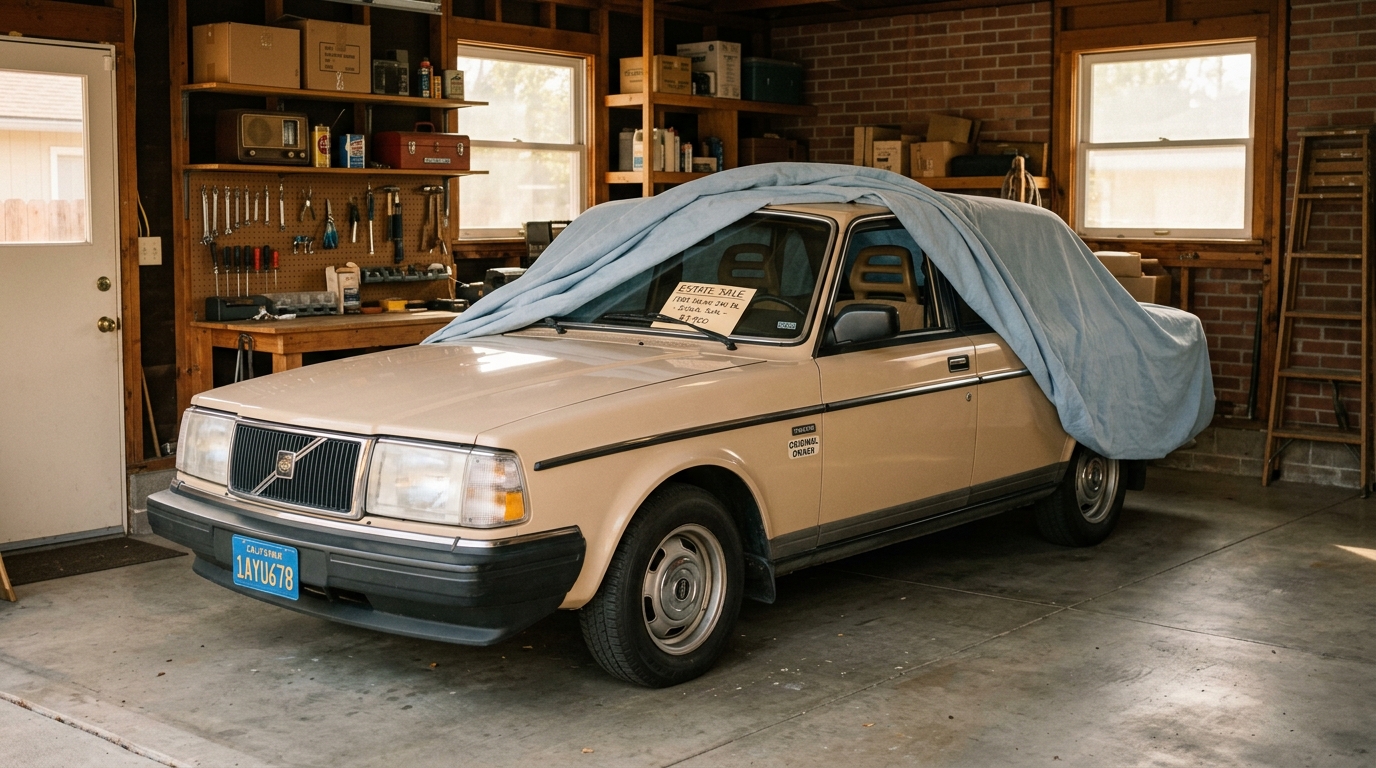
Among experienced used car buyers, vehicles purchased from an estate sale or an elderly original owner are considered the holy grail: one registered owner, low odometer mileage, religiously serviced at the local dealer, and parked inside a climate-controlled garage for its entire life. But buying from an estate or probate proceeding involves unique legal documents and mechanical risks that you will never encounter at a dealership.
Quick answer
To legally buy a car from an estate or probate sale, the seller must have court-issued Letters Testamentary or Letters of Administration proving their legal authority as executor or personal representative, or qualify under a state Affidavit for Transfer Without Probate (Small Estate Affidavit). Mechanically, cars that sit idle for months require immediate inspection for aged dry-rotted tires (check DOT date codes), oxidized engine oil sludge from short grocery trips, desiccated rubber engine seals, and stale fuel.
Why Estate Cars Are the Ultimate Hidden Deals
Most used cars on the market today have passed through two or three owners, suffered missed oil change intervals, or spent winters parked outside on salted streets.
Estate vehicles represent a distinct category:
- Single Ownership: Often bought brand-new from a local dealer and kept by the same individual for 10, 15, or 20 years.
- Exceptionally Low Mileage: Many estate sedans and crossovers have accumulated only 3,000 to 5,000 miles per year, primarily driven on suburban surface streets.
- Meticulous Physical Condition: Garaged every night, preserving the exterior clear coat from sun fading and protecting the dashboard vinyl and leather upholstery from UV degradation.
- Realistic Pricing: Family heirs and estate attorneys are usually motivated to liquidate physical assets quickly to settle estate debts and divide proceeds among beneficiaries, creating opportunities for fair negotiation.
The Legal Paperwork: How to Verify the Seller Has the Right to Sell
The most common legal roadblock is handing money to a family member who does not legally possess the right to sign over the deceased owner's title. If the title is in the name of a deceased individual, the DMV will reject the transfer unless supported by specific legal probate filings.
| Probate Status | Required Legal Document | How the Title Must Be Signed |
|---|---|---|
| Formal Probate Proceeding | Court-certified Letters Testamentary (with will) or Letters of Administration (no will). | The executor signs on the seller line: "John Doe, Executor of the Estate of Jane Doe, Deceased." |
| Small Estate Exemption (No Court Probate) | State-specific Affidavit for Transfer of Vehicle Without Probate along with a certified Death Certificate copy. | The designated legal heir signs the affidavit and title in accordance with state statutory limits (e.g. California Form REG 5). |
| Living Trust Title | Certificate of Trust or Trust Agreement showing Successor Trustee appointment. | Signed: "John Doe, Successor Trustee of the Jane Doe Family Trust." |
Always ask to see the certified court document before you exchange money. If the seller says, "My grandfather passed away and I am his favorite grandson, so I am selling his car," stop. Until legal estate authority is documented, you cannot legally title that car.
The Mechanical Traps of Low-Mileage Garage Queens
Low mileage on an older car is not always an unmixed blessing. An engine that runs 2,000 miles a year on short 2-mile trips to the pharmacy can suffer more internal wear than a car driven 15,000 highway miles a year.
Look out for these four mechanical issues:
1. The 10-Year-Old "New" Tires (DOT Date Code Trap)
You look at the tires, and the tread looks 95% full. But check the 4-digit Department of Transportation (DOT) date code stamped on the sidewall (for example, "2414" means manufactured in the 24th week of 2014). Rubber oxidizes and hardens over time, regardless of tread depth. Tires older than six to seven years suffer internal belt separation and can suffer sudden catastrophic blowouts on the highway. Budget $600 to $1,000 for a fresh set of tires immediately.
2. Dried Rubber Oil Seals and Gaskets
Engine oil contains conditioning additives designed to keep rubber valve cover gaskets, front crank seals, and rear main seals pliable. When an engine sits unrun for six months to a year, oil pools in the oil pan, and the upper engine gaskets dry out, shrink, and harden. When you start driving the car daily at 70 mph, oil pressure forces past these brittle gaskets, creating multiple active leaks within the first month.
3. Moisture Condensation and Oil Sludge
Combustion produces water vapor as a byproduct. When a car is driven on short 5-minute trips, the engine oil never reaches operating temperature (212°F / 100°C) long enough to boil off that moisture. The water mixes with unburned fuel and engine oil, creating a milky yellowish sludge under the oil cap and forming carbon deposits inside the engine head. Always unscrew the oil filler cap and check for yellow emulsion or thick dark sludge on the valve rockers.
4. Stale Fuel and Varnish in the Tank
Modern pump gasoline contains up to 10% ethanol, which begins absorbing atmospheric moisture and degrading in as little as three months. If the car has sat for two years with old gas, the fuel breaks down into foul-smelling brown varnish, clogging fuel filters, sticking fuel injectors, and gumming up the fuel pump.
Analyze Any Listing in Seconds
Paste a Facebook Marketplace or dealer link. Avturo flags hidden issues and suggests what to ask.
Try Avturo FreeExpected Refresh Costs on Older Low-Mileage Sedans
Classic estate picks (like a 2012 Toyota Avalon, 2011 Buick Lucerne, or 2013 Lexus ES 350) have bulletproof drivetrains, but you should budget $1,200 to $2,000 right after purchase for a baseline fluid and rubber refresh:
| Model | Typical years | Avturo cost-to-own (maint. + repairs / yr) |
|---|---|---|
| Toyota Avalon | full-size sedan | $800 to $1,300 |
| Lexus ES 350 | midsize luxury sedan | $1,600 to $2,400 |
| Buick LaCrosse | full-size luxury sedan | $800 to $1,300 |
| Honda Accord | midsize sedan | $800 to $1,300 |
Figures are Avturo's model-specific estimates for scheduled maintenance plus likely out-of-warranty repairs only. They exclude insurance, fuel, financing, and depreciation, which vary too much per driver to be useful. Ranges are anchored to Edmunds True Cost to Own and RepairPal data, then adjusted for a high-mileage budget example (about 45,000 miles). Your real number depends on the individual car's service history, which is exactly what Avturo checks when you run a listing.
Estate Car Acquisition Checklist
When you find an estate listing that looks promising, follow this step-by-step procedure:
- Confirm Executor Authorization: Ask the seller politely if probate is complete and if they have certified Letters Testamentary or small estate paperwork ready.
- Inspect the Engine Bay for Rodents: Garaged cars that sit untouched for months attract mice and squirrels looking for nesting material. Inspect under the plastic engine cover, inside the air filter housing, and around wiring harnesses for chew marks.
- Check Brake Rotors and Fluid: Sitting in a damp garage can cause heavy surface rust on brake rotors and turn hygroscopic brake fluid dark green or black.
- Perform a Baseline Fluid Flush: Immediately after purchase, change the engine oil, coolant, transmission fluid, and brake fluid. Replace the engine air filter, cabin filter, and wiper blades.
- Submit Title at the DMV with Death Certificate: Bring the signed title, bill of sale, certified copy of the death certificate, and the court letters or state affidavit to your DMV to issue the new title cleanly.
Summary
Vehicles from estate and probate sales often offer the best value-to-condition ratio in the entire used car market. Verify that the person holding the keys has court-certified executor authority or valid small estate documentation, look past shiny paint to check tire date codes and dried gaskets, and budget for a comprehensive baseline fluid service before making it your daily driver.