
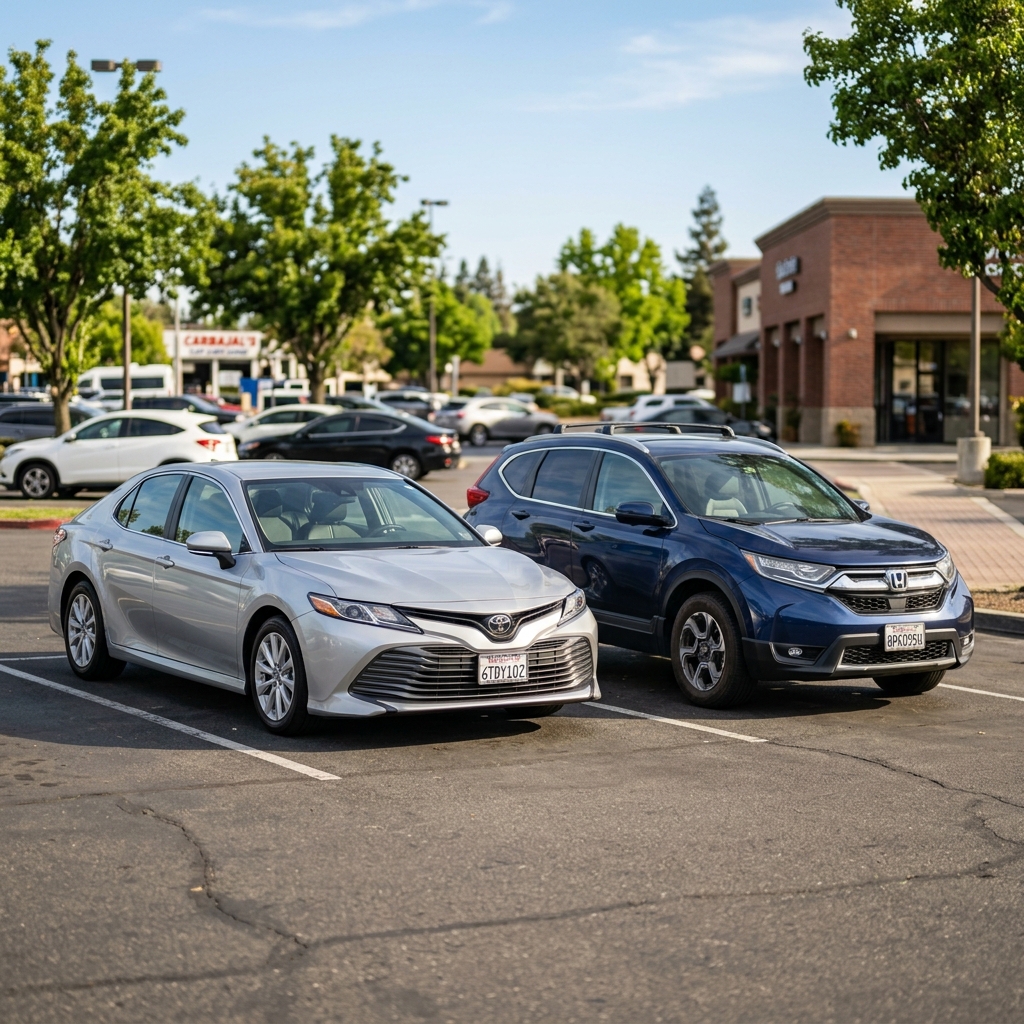
If you’re buying used this year, the goal is simple: maximum reliability, low total cost of ownership, strong safety, and minimal depreciation risk. Below is a practical short-list based on published dependability, safety and longevity studies and Avturo's own maintenance-and-repair estimates. We grouped picks by use-case so you can zero in fast, and added “model-year sweet spots” where value is highest.
Quick answer
What are the best used cars to buy in 2026? For most buyers the standouts are the Toyota Corolla, Camry and RAV4, Honda Civic, Accord and CR-V, and Mazda3 and CX-5. They combine strong long-term reliability records with modest running costs (see Avturo's maintenance-and-repair estimates in the table below). Choose by use-case and prioritize a documented service history over low mileage.
How We Chose Our Picks
Our recommendations are based on a synthesis of industry-leading data sources to provide a holistic view of each vehicle:
- Reliability & Dependability: J.D. Power’s 2026 U.S. Vehicle Dependability Study, which counts problems per 100 vehicles reported by original owners of three-year-old (2023 model-year) cars.
- Long-Term Longevity: iSeeCars’ 2025 Longest-Lasting Cars study, which ranks models by their predicted chance of reaching 250,000 miles.
- Safety: IIHS Top Safety Pick methodology and the awards each model earned in its own model year.
- Running Costs: Avturo's own model-by-model estimates of annual maintenance and likely repairs (table below).
Quick Picks by Use-Case (TL;DR)
| Use-case | Rough budget | Picks | Why | What to check |
|---|---|---|---|---|
| Budget Commuter | $8k to $15k | Corolla, Mazda3, Civic | Strong reliability records, low running costs | Focus on documented service history |
| Family Sedan | $12k to $22k | Camry, Accord, Lexus ES | Spacious, safe, and strong value retention | Confirm CVT fluid service on Accords that use a CVT |
| Small SUV | $15k to $25k | RAV4, CR-V, Forester | Versatile, reliable, good for families | Check for AWD system maintenance |
| Midsize/3-Row SUV | $18k to $32k | Highlander, Pilot, Lexus RX | Strong reliability records, lots of space | The Pilot's V6 uses a timing belt: confirm it was replaced on schedule |
| Hybrids & PHEVs | Varies | Prius, Ioniq Hybrid | Big fuel savings, strong dependability | Verify battery health and warranty status |
What They Cost to Own (Avturo Data, by Use-Case)
Reliability ratings tell you a car probably won't break, but not what it costs to run. Here are the annual maintenance + likely-repair estimates Avturo's dataset assigns to a representative pick in each tier (typical ~70,000-mile example), so you can compare running costs, not just sticker prices:
| Model | Typical years | Avturo cost-to-own (maint. + repairs / yr) |
|---|---|---|
| Budget Commuter, Toyota Corolla | Budget commuter | $600 to $900 |
| Family Sedan, Honda Accord | Family sedan | $700 to $1,100 |
| Small SUV, Toyota RAV4 | Small SUV | $700 to $1,100 |
| Midsize/3-Row SUV, Honda Pilot | 3-row SUV | $1,000 to $1,400 |
| Hybrid, Toyota Prius | Hybrid | $500 to $800 |
Figures are Avturo's own estimates for scheduled maintenance plus typical repairs only, at US independent-shop prices. They exclude insurance, fuel, financing, and depreciation, which vary too much per driver to be useful. They are estimates, not measurements, and no outside source has reviewed them; each range is adjusted for the example car's age and mileage (about 70,000 miles). Your real number depends on the individual car's condition and service history, so ask the seller for the records. If you attach a Carfax or AutoCheck report when you run a listing, Avturo reads it and compares it with the ad.
Check Any Listing in About a Minute
Paste a Facebook Marketplace or dealer link. Avturo shows the red flags in the ad, the problems that model is known for, and what to ask the seller.
Try Avturo FreeWhy These Models Win in 2026
These vehicles consistently rise to the top for four key reasons:
1. Proven Dependability at 3 to 5 Years Old
In J.D. Power’s 2026 U.S. Vehicle Dependability Study, Lexus ranked highest overall for the fourth year in a row and Buick ranked highest among mass-market brands, against an industry average of 204 problems per 100 vehicles. Three-year dependability is a useful early signal for how a nameplate holds up as a used car, but the study covers 2023 models, not the older model years on this list, so pair it with the longevity data below and the individual car's service history.
2. Crash Safety That Ages Well
The IIHS Top Safety Pick program rewards vehicles with excellent crashworthiness and crash-avoidance tech. Shopping trims that originally earned TSP/TSP+ status keeps you ahead on structural safety and headlight performance even years later.
3. Real Longevity Data, Not Anecdotes
iSeeCars’ 2025 Longest-Lasting Cars study put 10 Toyota models and five Honda models in its top 25 for the predicted chance of reaching 250,000 miles. The Toyota Sequoia led at 39.1 percent, against an average of 4.8 percent for all vehicles, and five hybrids made the top 25. If you want to own well past 200,000 miles, start with those brands, and with a car whose maintenance is documented.
4. Predictable Costs
While exact maintenance varies, hybrids like the Prius and simple naturally aspirated four-cylinders (Corolla, Camry 2.5L) have long records of steady running costs and few surprise repairs. A used Prius Prime or Chevrolet Volt can also cut fuel costs sharply if you can charge at home. Don't count on a tax break, though: the federal used clean vehicle credit ended for vehicles acquired after September 30, 2025, so no used plug-in hybrid or EV qualifies for it now.
Model-Year “Sweet Spots” to Target
- Toyota Corolla: 2015 to 2018 (simple powertrains, abundant supply; most automatics are CVTs, while the base L kept a 4-speed automatic through 2016).
- Mazda3: 2014 to 2017 (Skyactiv engines; check for rust on northern cars).
- Honda Civic: 2016 to 2018 (10th gen; automatics are CVTs, so confirm fluid service, and on 1.5T cars look for records of Honda's oil-dilution software update).
- Toyota Camry: 2017 to 2019 (last year of prior gen + early years of current gen; both strong).
- Honda Accord: 2016 to 2018 (2016 to 2017 four-cylinders use a CVT and the V6 a 6-speed automatic; 2018 brought a 1.5T with a CVT and a 2.0T with a 10-speed automatic. Confirm CVT fluid service on any CVT car).
- Lexus ES: 2017 to 2019 (ES 350/300h; depreciation turns luxury into value).
- Toyota RAV4: 2017 to 2019 (tons of inventory; hybrid is excellent).
- Honda CR-V: 2017 to 2019 (space & MPG; on 2017 to 2018 1.5T models, look for records of Honda's oil-dilution fix, a software update and oil change that came with an extended powertrain warranty).
What to Inspect Before You Buy (Checklist)
- Title & History: No salvage/flood; consistent mileage; maintenance records.
- Safety Tech: Test adaptive cruise, lane-keep, automatic braking; check the VIN at nhtsa.gov/recalls for open recalls.
- Fluids & Wear Items: Transmission service on CVTs; brake life; tires in matched sets; coolant; hybrid battery health.
- Road Test: Cold start, highway merge, hard stop, tight parking-lot turns, A/C at idle. Check our full AI test drive checklist.
- Independent PPI: A $150 to $250 pre-purchase inspection can save you thousands.
How to Time Your Purchase
Target “depreciation cliffs.” For most mainstream models, the 4 to 6 year window is where depreciation has done its work, but life expectancy is still high. Also, shop at the end of the month and quarter when dealers are trying to meet quotas.
Bottom Line: Stick with the Proven Winners
If you want the simplest play that ages well, Toyota/Lexus and Honda sedans/crossovers from ~2016 to 2019 remain the best “buy and forget” used vehicles. Use Avturo to check any listing’s red flags, how its asking price compares with similar cars for sale, and the model’s known problems before you even leave the house.
Check a Listing Free