
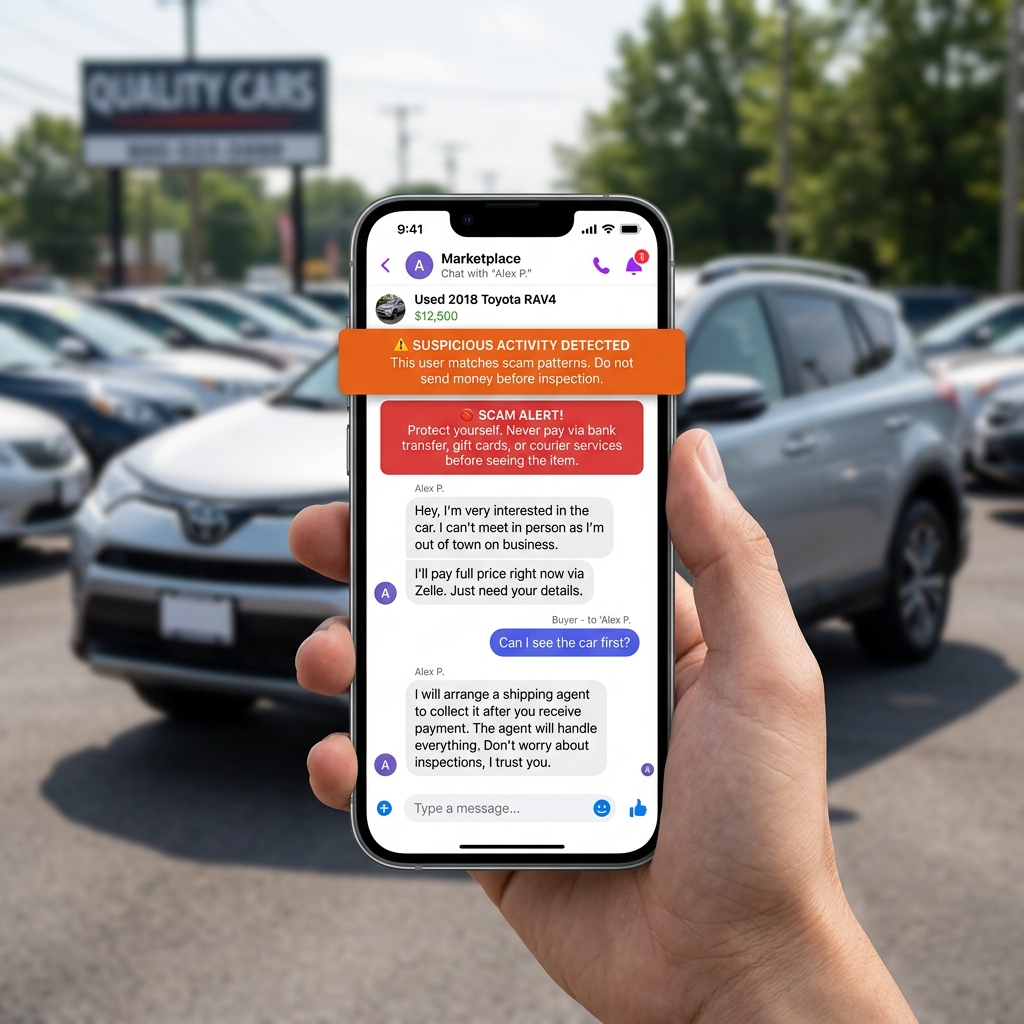
Facebook Marketplace is one of the most popular places to buy and sell used cars, but in 2026, many scams have moved beyond simple "send me cash" requests into sophisticated phishing and identity theft schemes.
While the physical car might look great, the biggest threats on Marketplace today happen before you ever meet in person. Understanding these modern phishing patterns, verification code exploits, and fake report platforms is critical to protecting your identity, phone number, and financial accounts.
The Atomic Answer: What are 2026 Marketplace Scams?
Alongside the classic take-the-deposit-and-run scam, many 2026 Facebook Marketplace scams rely on digital phishing, credential theft, and phone number hijacking. Scammers target your personal data and money using fake vehicle history platforms, Google Voice verification-code tricks, and payment apps like Zelle or Venmo, where a payment you authorize is usually hard or impossible to reverse, all before you ever see the vehicle in person.
1. The Fake Vehicle History Phishing Scam
This is a widely reported scam on Facebook Marketplace. The seller lists a clean, slightly underpriced used car. When you ask for a CARFAX or AutoCheck report, the seller claims they don't have one or had a bad experience with those sites.
Instead, they send you a link to an official-looking website you have never heard of, often with a generic "VIN report" style name, and ask you to pay a small fee to run the report, promising they will refund you at the test drive.
The reality: The site is either fake or tied to the scammer, who may earn a commission on every report sold, and the car often doesn't exist. They are not trying to sell a car. At best you pay for a worthless report; at worst your credit card details and personal information are stolen on the payment screen.
⚠️ Warning Signs of a Fake History Report Site
- The site domain was registered within the last 30 days (check using a WHOIS search).
- It only accepts credit cards and lacks alternative secure payment options like PayPal or Apple Pay.
- The seller refuses to let you run a report on your own preferred, reputable platform.
Check Any Listing in About a Minute
Paste a Facebook Marketplace or dealer link. Avturo shows the red flags in the ad, the problems that model is known for, and what to ask the seller.
Try Avturo Free2. The Google Voice Verification Hijack
In this scenario, the "seller" (or sometimes a fake "buyer" targeting you when you sell a car) asks for your mobile number to text you and coordinate a meeting. They then say: "I need to verify you are a real person because there are too many scammers on here. I am sending a code to your phone from Google, tell me what the code is."
What is actually happening: The scammer is setting up a Google Voice account using your phone number. To complete the setup, Google sends a verification code to your device. By giving the code to the scammer, you let them create a phone line tied to your number, which they can use to scam other people. A code request can also be an attempt to take over one of your own accounts, so never share a verification code with anyone.
3. The "Zelle/Venmo Deposit" Pressure Play
The seller claims there is overwhelming interest in the vehicle (e.g., "I have 5 other people coming today to look at it"). They demand a deposit of $200 to $500 via Zelle, Venmo, CashApp, or Apple Cash to "hold" the car for you.
Once you send the deposit, they block your profile, delete the listing, and disappear. Peer-to-peer payments work like handing over cash: they are traceable, but once you authorize one, your bank or the app usually will not reverse it.
4. Legitimate vs. Scam Seller Check
Use this quick comparison table to evaluate the seller's profile and communication pattern before scheduling a meeting:
| Feature | Legitimate Seller | Potential Scammer |
|---|---|---|
| Profile Age | Created years ago; active personal history. | Brand new profile (2025/2026) with zero content. |
| Location | Matches listing location; open to local meetups. | Claims to be "out of town" or "deployed"; proposes shipping. |
| Vehicle History | Provides VIN willingly; accepts CARFAX/AutoCheck. | Insists on using a sketchy third-party history link. |
| Deposits | No money exchange before inspection/test drive. | Demands immediate cash app deposit to hold. |
How to Verify a Marketplace Listing with AI
Before messaging a seller, you can paste the Marketplace link or the ad text, or upload screenshots of the description and photos, into the Avturo Listing Analyzer. Facebook sometimes blocks link reading, so screenshots are the most reliable route, and Avturo only sees the photos when you upload them as screenshots.
Avturo's AI reads the listing for red flags such as seller pressure, title or lien problems, and mileage that doesn't add up, compares the asking price with live asking prices of comparable listings (or gives a clearly labeled AI estimate when it can't find enough), tells you when no VIN is listed and gives you a message to ask for it, and suggests questions to ask the seller. It does not check the seller's identity or profile, so the payment and profile warnings above are still on you.
For additional foundational warning signs regarding physical vehicle parameters, be sure to read our original guide on 11 Facebook Marketplace Red Flags.
Summary: Safe Buying Checklist
- Never pay a deposit before seeing the vehicle in person.
- Inspect profiles: Avoid sellers with brand-new profiles, no friends, or listings across multiple far-away locations.
- Meet in public: Always meet at a designated safe exchange zone (like a police station parking lot) and only pay after inspecting the title.
- Always run your own history report using the official VIN on the car's physical dashboard plate.